CryptoCasino.com on mobile and Telegram
 Available in GB
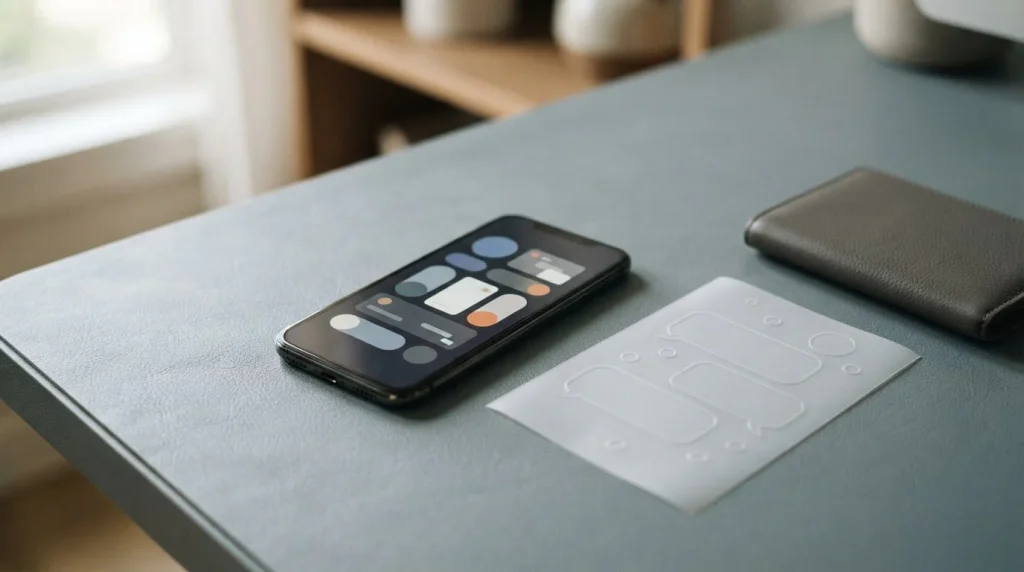
CryptoCasino.com presents its casino through a responsive mobile website and a Telegram-linked account experience. The mobile web browser serves as the primary playing interface alongside Telegram access, while wallet connections support its cryptocurrency-first account model. On a phone, the key questions are where identity is held, what a transaction prompt authorises and how clearly game information fits on a smaller screen.
Table of Contents
- Telegram adds another route into the casino account experience
- The mobile website is the main playing interface
- Small-screen convenience can hide high-impact prompts
- Coin, chain and address are separate checks on a phone
- Live tables change the rhythm of a mobile session
- Questions about CryptoCasino.com mobile
- Mobile account security depends on the device and session
Telegram adds another route into the casino account experience
CryptoCasino.com incorporates Telegram into its broader Web3-oriented casino experience. The connection is part of the product’s account and navigation approach alongside a conventional browser interface and supported wallet sign-in. Telegram’s distinctive feature is that it brings an existing messaging identity into contact with a separate casino account, which can make a mobile journey feel less fragmented. It does not remove the distinction between a messaging session, a gaming balance and an external crypto wallet.
The relevant user experience has three layers. First, the phone has an operating-system session and whatever screen lock protects it. Second, Telegram maintains its own login session and recovery arrangements. Third, the casino account retains its identity, balance records, controls and support history. A problem at any layer can affect what the user can access, but solving one layer does not automatically resolve a problem at another. That is why a Telegram connection should be treated as an additional account surface rather than a substitute for individual account security.
SharpLink’s SEC reporting and the casino’s own materials describe a Telegram-linked presence. The important product fact is the integration itself, not an assumption that every casino feature is identical inside Telegram and the web browser. Screens, handoffs to wallet applications and security prompts can differ by device. In particular, a handoff from Telegram to an external wallet can involve a switch to another application where the content of the approval needs to be read independently.
| Layer | What it handles | Security question |
|---|---|---|
| Phone | App sessions, device lock and notifications | Who can unlock the device and view incoming messages? |
| Telegram | Messaging identity and associated session | Who controls the messaging account and its recovery route? |
| Casino account | Gaming balance, settings and support interactions | Which credentials and profile checks apply to the gambling account? |
| Crypto wallet | Blockchain address and transaction approval | What message or asset movement is being authorised? |
These layers are related by use, not by ownership of funds. A contact in a messaging app cannot make a blockchain transfer reversible. Likewise, a wallet address visible inside a casino conversation does not establish that the person on the other end controls the associated account. Clear boundaries between identities become particularly useful when the same phone carries gaming, messaging and financial apps.
The mobile website is the main playing interface
CryptoCasino.com operates a responsive casino website that adapts to phones and tablets. Mobile play runs directly through the browser rather than through a dedicated native Android or iOS store application. That difference matters in a practical comparison: a responsive site uses the browser’s navigation, storage and permission model, while a native app is installed and updated through an operating-system package. A browser interface can still deliver interactive game lobbies, live tables and account settings.
The mobile website accommodates the same broad categories as the desktop casino: software-driven slots and games, dealer-streamed tables and the account features connected to a crypto-oriented wallet flow. A small screen changes how this information is arranged. A condensed menu can make several game categories feel close together; a table that is comfortable on desktop may require horizontal movement or a landscape view. These are interface trade-offs, not changes to a game’s probability model.
A practical browser-versus-native-app comparison concerns maintenance and security as much as appearance. Browser updates are handled by the browser and website, whereas native apps require a separate software package and installation route. A familiar icon on a home screen does not tell a user whether it opens a website or installed code. The product evidence for CryptoCasino.com supports a mobile web experience, so claims about a dedicated app-store version or app-specific features would not describe that experience accurately.
- Page navigation
- A browser uses tabs, page history and the site’s responsive menus; back navigation can lead to a different part of an account journey.
- Session continuity
- Switching away to a wallet, email or messaging application can interrupt or refresh what is visible on the original screen.
- Permissions
- Camera access for a QR interaction or notifications should be understood in the context of the browser or connected application requesting them.
- Updates
- Web layout changes arrive through the site, while the mobile operating system and browser remain separate software components.
The core distinction is that web delivery does not remove account responsibility. A casino balance, a phone’s browser session and a connected external wallet remain separate objects even when they appear on successive screens. The more devices and applications are involved, the more valuable clear session boundaries become.
Small-screen convenience can hide high-impact prompts
Several ordinary phone behaviours create security trade-offs in a wallet-linked casino journey. Notifications can display account details on a locked screen; autofill can select the wrong saved credential; switching apps can conceal which site initiated a wallet prompt. None of these behaviours proves anything about the casino’s own security controls. They are general consequences of using a compact, multipurpose device for both authentication and financial transactions.
For example, a wallet may display a long receiving address or a message for approval, while the user mainly sees the first and last characters. Reading only a shortened address risks missing a substitution in the middle. Equally, a wallet signature that authenticates a session should not be treated as a blanket authorisation for future asset movements. A transaction prompt deserves attention to the asset, network and requested action separately from the apparent convenience of the preceding login flow.
Account identity is also relevant when a phone is replaced. A browser password may be retrievable through a password manager, but a crypto wallet can depend on its own backup method. Telegram may rely on a messaging-account recovery route, and the casino may ask for proof of identity when account access is questioned. These recoveries involve different institutions and different forms of evidence. Combining them into a single assumption about ‘recovering the app’ creates avoidable confusion.
- Before authorising: identify whether the prompt is for sign-in, data access or a blockchain transfer.
- On a shared device: consider whether saved browser sessions expose account information to the next user.
- After changing phones: distinguish recovery of a password, messaging identity and wallet keys.
- For unusual messages: treat unexpected requests for recovery phrases or identity photos as possible impersonation attempts.
In the broader account and identity guide, email sign-in, wallet connection and documentary checks are considered separate stages. That separation is even more important on mobile because several different services can be open within moments. The screen is small; the permissions and financial consequences are not.
Coin, chain and address are separate checks on a phone
CryptoCasino.com’s help information describes a crypto-oriented deposit flow built around a selected coin, a receiving wallet address or QR code, and network confirmation before credit. Supported assets include Bitcoin, Ether and Tether, with Ethereum ERC-20 and Tron TRC-20 appearing in the described network options. These labels refer to materially different transfer routes. Selecting the correct ticker without confirming the intended chain can still produce a transfer that does not arrive as expected.
On mobile, the usual challenge is that the receiving address may be displayed in one browser view while the sending wallet operates in another application. A QR code can reduce manual copying, but it does not change the economic or technical meaning of the transaction. It must still carry the correct asset, network and destination. Copying a destination, opening a wallet and returning to the browser create several moments when an old clipboard item or a different account screen could be mistaken for the intended one.
- Identify the asset: BTC, ETH, USDT and other coins are distinct balance types and may use different networks.
- Read the chain: for example, USDT on ERC-20 uses Ethereum infrastructure, while USDT on TRC-20 uses Tron infrastructure.
- Check the destination: a receiving address and the network designation must describe the same transfer path.
- Separate sending from credit: an on-chain transfer can be completed before a casino interface reflects the funds.
These four distinctions explain a process; they are not a deposit recommendation. Blockchain transfers can be irreversible, and blockchain confirmation is different from the casino’s later account credit. A network charge can also be separate from any operator processing rule. The crypto payments and network table covers the named assets and why choosing a chain is a separate step from choosing a coin.
A phone’s camera, clipboard and wallet connection can make the process visually smoother, but they cannot validate whether a transfer is suitable or recover funds sent to an incompatible destination. The responsibility to interpret the displayed transaction remains with the person authorising it. That is the essential limit of QR convenience: it transports details, not a guarantee that those details are correct.
Live tables change the rhythm of a mobile session
CryptoCasino.com includes live roulette, blackjack, baccarat and studio-hosted game shows. These formats differ from ordinary software-driven slots because a dealer stream and a table interface share the screen. The viewer may need to follow the stream, inspect the betting layout and understand the timing of an active round at once. On a phone, those elements compete for a limited display area; changing the orientation or zoom can alter readability without altering the game’s underlying odds.
Live play often communicates a sense of continuity through the dealer feed. That sensation should be separated from the economics of each wager. A physical-looking table can be subject to the same house advantage and betting losses as other casino formats. The camera view does not improve the mathematical expectation of a bet. Where side bets or alternative table rules exist, their conditions should be assessed within the particular game rather than inferred from the live presentation alone.
In a mobile session, the interface also competes with events outside the game. A notification can cover part of the layout, an incoming call can interrupt the stream, and leaving the browser can disconnect a session. These are general device risks rather than service-level claims about the casino. They matter because a quick return to an already-moving round can encourage an ill-considered input, particularly if the visible stake or countdown is easy to misread.
| Mobile format | What the screen prioritises | What deserves attention |
|---|---|---|
| Slots and short-result games | Large action controls and rapid outcome animations | Stake per round, optional features and how rapidly turnover accumulates. |
| Live roulette | Dealer stream, betting grid and a round timer | Whether the stake and selection are readable before betting closes. |
| Live blackjack | Cards, possible decisions and table messages | Decision timing and the rules attached to the displayed table. |
| Live baccarat | Stream, stake selections and result history | Difference between displayed patterns and future-event probabilities. |
CryptoCasino.com’s browser-first mobile setup offers access to a variety of game formats through a compact interface. That presentation can be convenient for viewing, yet it also makes the separation between entertainment and financial exposure more important. A vivid stream, fast controls or convenient account connection does not reduce the chance of losing money.
Questions about CryptoCasino.com mobile
Does CryptoCasino.com have a dedicated mobile app?
CryptoCasino.com operates through a responsive mobile website and Telegram interface rather than a dedicated native Android or iOS app.
What is the CryptoCasino.com Telegram connection?
Telegram is part of CryptoCasino.com’s account and casino experience. The messaging session, casino account and separate cryptocurrency wallet retain different security roles.
Can CryptoCasino.com connect with a mobile crypto wallet?
The casino describes wallet connections and address or QR-based crypto transfers. The coin, network and destination must match the intended blockchain transaction.
Which live games are included on mobile?
CryptoCasino.com includes live roulette, blackjack, baccarat and hosted game shows within its casino catalogue. A phone screen changes the layout, not the fundamental game odds.
Mobile account security depends on the device and session
CryptoCasino.com’s responsive website carries the casino catalogue onto phones, while Telegram and wallet sign-in add separate account surfaces. That combination is distinctive because the user experience can move quickly between browser, messaging application and cryptocurrency wallet without changing the underlying responsibility for each credential or transfer.
The important mobile distinction is not whether the interface resembles an installed app. It is whether the correct site, account, asset and network can be recognised at each step. Smaller controls and rapid screen changes can obscure those boundaries, and an on-chain mistake may be irreversible. Responsive design improves presentation; it does not provide financial protection against gambling losses or transfer errors.